


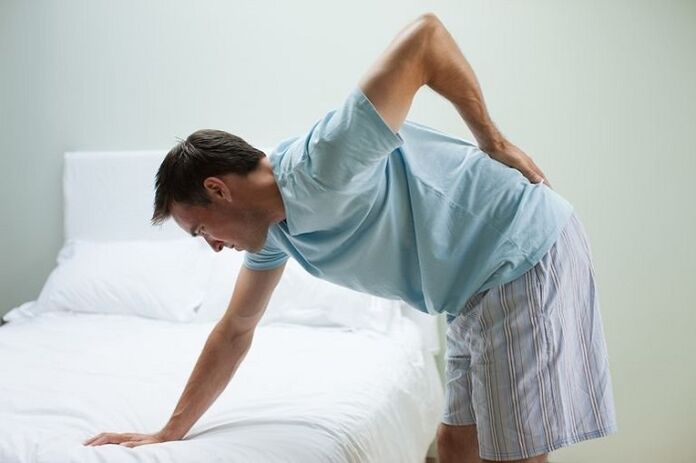
It turns out that back pain in the lower back is a very common occurrence.
According to biologists, this symptom is a consequence of our upright posture, in which the load falls mainly on the lumbar region, and is not distributed evenly across the spine.Pain in the lower back can signal very serious problems not only in the spine, but also in the internal organs.
If the pain is sharp and accompanied by a fever, call an ambulance.
If such symptoms are not observed, for an accurate diagnosis you should consult a therapist.Let's find out why these symptoms occur, how they can be treated and prevented.
The main causes of pain in the lower back
First, let's find out the causes of these unpleasant symptoms.Pain can be primary in spinal pathologies or secondary in diseases of internal organs.
Along with the causes, it is important to identify the factors that increase the pain syndrome.
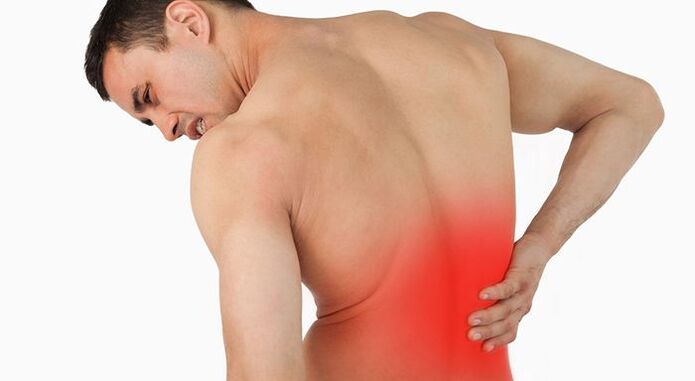
Here they are:
- Characteristics of the profession: heavy physical activity for builders and loaders and weight lifting for athletes.
- Prolonged stay in the sitting position.
- Excess weight and sedentary lifestyle.
- Poor nutrition and lack of proteins, calcium and phosphorus in the body.
- Bad habits: alcohol and spirits.
Even by reducing the impact of these factors, you will significantly improve your condition and the health of your spine.
Primary factors
Primary factors are associated with degenerative-dystrophic processes in the spine.
These include:
- Osteochondrosis is changes in the cartilage and intervertebral discs, leading to hernia or deformation of the discs.
- Spondylosis is characterized by the formation of bone spurs on the vertebrae.With this growth, the muscles around the spine go into spasm, which limits their mobility.The appearance of injuries in the lumbar region.
- Spondyloarthrosis is the degeneration of the articular surfaces of the vertebrae, as well as their involvement in the pathological process of ligaments, joints and muscles.In this case, deformation of the intervertebral discs occurs and the mobility of the spine is limited.
- Spondylolisthesis is manifested by displacement of the vertebrae, as a result of which the lumen of the spinal canal changes.
- Intervertebral disc herniation.
- Radiculopathy is damage to the nerve root.
Secondary factors
Secondary ones occur with concomitant pathologies:
- Problems with metabolism.
- Curvature of the spine.
- When malignant tumors are located near the spine.
- Infectious diseases: spinal osteomyelitis, tuberculous spondylitis, spinal epidural abscess.
- Spine injuries.
- Autoimmune diseases.
- Painful symptoms of a psychogenic nature.
- Diseases of the digestive system.
- Diseases of the pelvic organs.
- Menstrual pain.
In addition, spinal problems can be affected by flat feet, that is, flattening of the arch of the foot.
Pregnancy can also cause pain.In the early stages, they appear when progesterone affects the ligaments and muscles, also when there is a threat of miscarriage or during an ectopic pregnancy.
After childbirth, pain may arise as a result of the stretching of the pelvic muscles, or the increased load on the spine, with the frequent carrying of the child in the arms.
What diseases does this pain signal?
The location of the pain is also important.
So, let's analyze each case:
- Severe pain on the right and above the lower back may indicate pulmonary pathology.These symptoms are accompanied by shortness of breath, cough and fever.Also about gallbladder or liver problems.At the same time, the nature of the pain is piercing;
- if you feel discomfort above the lower back on the left, this may be a sign of pancreatitis, myocardial infarction, pericarditis or left-sided pleurisy;
- symptoms of pain in the lower back indicate osteochondrosis in this area, intervertebral hernias, as well as compression fractures;
- a symptom of pain below the lower back that radiates to the lower abdomen is a sign of diseases of the pelvic organs.Such diseases include fibroids, endometriosis, prostate pathologies, colon diseases and infectious gynecological diseases.This may also indicate that the kidneys are not in order.
Which doctor will help?

Most of the time, low back pain occurs temporarily.Only in rare cases do these symptoms signal complex illnesses.
In any case, it is worth knowing which doctor can help in this situation.Sharp pain often occurs with increased physical activity.
In other cases, you can seek help from a surgeon, urologist or even a chiropractor, who will make a more accurate diagnosis and prescribe how to treat the problem.
Furthermore, for these pains, it may be necessary to consult a traumatologist, orthopedist, gastroenterologist, infectious disease specialist, proctologist or gynecologist.
Features of treatment
Depending on the causes of your back pain, your doctor will prescribe the following treatment options:
- drug treatment with analgesics and hormones;
- blocks, which are injections into the intervertebral joints;
- manual techniques;
- physiotherapeutic procedures;
- therapeutic exercises;
- acupuncture.
If conservative treatment does not help, then surgery is used.
In the treatment of a herniated disc due to osteochondrosis, physiotherapeutic methods are used in addition to the main treatment.
Therapeutic blocks are used when other methods do not produce the desired effect.Most often, for this purpose, anesthetics are injected into the lumen of the affected joint.
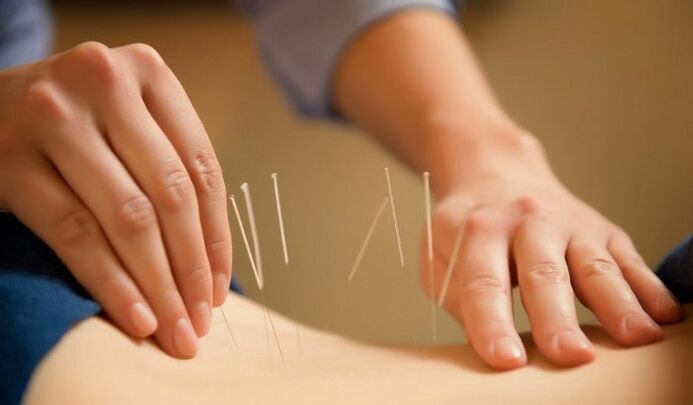
Acupuncture is recommended for disc protrusions, osteochondrosis or hernias.If the pain radiates to the leg, physical therapy will also be used.
Wearing a special corset allows you to limit movement in the lower back.This helps to reduce pain in the area of joint inflammation.
For back pain, your doctor may give the following recommendations:
- Rest in bed on a hard surface for 2 to 5 days.
- Using a special bandage.
- The use of anti-inflammatories and analgesics.
- To get rid of muscle spasms, muscle relaxants are prescribed.Special medications are also used to help relax the muscles.
- To improve blood circulation and reduce swelling, vascular and diuretic medications are used.
- All types of gels and ointments are used as local therapy.
- To consolidate the positive result, physiotherapeutic procedures are prescribed.This can be electrophoresis, phonophoresis and magnetic therapy.
Therapeutic exercises and special massages help to improve blood circulation, relieve muscle tension, and also eliminate the inflammatory process.
If the pain in the lower back is not associated with complex diseases, yoga classes will help alleviate the condition.
You can do similar exercises at home and they won't take much time.
Pain due to hypothermia
Did you know that a common cause of back pain is hypothermia.At the same time, you don't even need to freeze, just sweat and get into the air conditioning.
In this case, the hot surface of the body will come into contact with a stream of cold air.And the next day it will be difficult to straighten up or get up.
In such a situation, the pain becomes constant and painful.
First of all, you need to warm up your back.A warming ointment is suitable for this.If there is no medicine, regular alcohol will also be useful.After rubbing, the lower back should be wrapped in something warm.
A similar procedure is performed every day.If the pain is severe, you should seek help from a doctor.Nonsteroidal anti-inflammatory drugs are used to relieve pain.
If you often get hypothermic, buy a belt made from dog or sheep wool.
What to do with low back pain?
This pain occurs during intense physical exertion.A sharp pain that extends up the leg appears when carrying any weight.
A similar symptom is characteristic of lumbosacral radiculitis, called lumbago or low back pain.In such a situation, you need to lie down on a hard surface.
To ease the pain, take a pain reliever.
Remember that if you have these symptoms, you should not take a hot bath or steam in a sauna.In this case, dry heat will help more.
For example, a special ointment.It is also worth limiting your salt and fluid intake for several days.
What will help with a hernia?
A hernia causes sharp, constant pain that increases with any movement.Relief occurs only in the supine position.
You may also feel numbness in your lower back.To reduce pain, it is necessary to ensure bed rest and take painkillers.Then you need to call a doctor.
In the acute period, serious and qualified treatment is necessary.
What to do for prevention?
Don't wait for severe pain to appear, but start taking preventative measures.
Here they are:
- Identification and treatment of concomitant diseases that can cause low back pain.
- Adequate nutrition with sufficient amounts of phosphorus, calcium and other vitamins.
- Strenuous physical activity and heavy lifting should be avoided.In this case, the load must be evenly distributed.Don't make sudden movements.
- Lead an active lifestyle.Try walking, swimming or yoga.
- Take therapeutic massage courses periodically.
- When working sedentary, take a break every hour and get some exercise.
- The bed must be comfortable, for example, with an orthopedic mattress.
For prevention, you can use special elastic belts, posture correctors or bandages.
These devices are recommended during pregnancy and intense physical activity.
It is important to control your weight, as large body weight increases the load on the spine.Get rid of bad habits and also get a preventive exam every year.
Therapeutic gymnastics

To strengthen your back muscles and prevent pain, do exercises at home.Physical exercise must be done regularly.
A well-designed set of exercises will help improve posture, increase muscle tone, and also activate blood circulation.
In this complex you can use the following movements:
- body tilts in different directions.First left and right and then back and forth;
- turn the body to the sides;
- in the knee position - in the elbow position you need to bend your back up and down;
- lying on your back with your knees bent, raise your pelvis;
- in the lying position, straightened legs need to be bent at the knees and pulled towards the chest.
Perform each exercise 8 to 10 times.
Do not ignore the symptoms of pain in the lower back, go to the doctor and take preventive measures that will help normalize your well-being and improve your health.